MADISON, Wis. — Marcus Sedberry sat at a table overlooking Camp Randall Stadium late Thursday morning, briefly paused while answering a question and then apologized.
“Sorry, my phone,” he said. “I think I’ve gotten like eight phone calls, nine phone calls in the time here.”
There haven’t been many reprieves for Sedberry, Wisconsin’s football general manager, in the weeks since the Badgers’ season ended in November. Calls with agents, “all day, every day” have occupied his time, from introductory discussions about client lists to contract negotiations for returning Wisconsin players and prospective transfer portal additions. The hours have been similarly long for the rest of Wisconsin’s staff in its attempt to organize all the information necessary to rebuild the roster and then close on those portal players.
“This is a bad analogy,” Wisconsin coach Luke Fickell said Thursday. “I’ve used this. There’s a movie called Wolf of Wall Street. I say there are some similarities outside of the drugs and women. But it’s like the bell rings and it’s bam, bam, bam, activity.
“I’m not saying it’s always really fast. Sometimes, there’s lulls and things, but you just don’t know. The only problem for us is in the stock market, the bell rings at, what, 4? And things shut down. There is no bell. At 10 o’clock or 10:30, you try to shut your phone off. That’s about the only time.”
During a high school signing day press conference last month, Fickell said this of the impending transfer portal window: “If you don’t have a hell of a plan January 2nd, it’s going to be really, really tough.” For weeks, and even months, members of the staff readied behind the scenes for the madness to come. What followed were 20 outgoing players to the portal and, in the span of a week, 24 transfer portal additions across every position on offense and defense to generate enthusiasm about rejuvenating Wisconsin football in Year 4 under Fickell.
The process of reshaping the team has nearly reached the finish line, with a handful of potential remaining portal additions. And while the results of those efforts won’t be known until the season begins in September, Sedberry said Wisconsin stuck to its process in a number of areas. That included how the Badgers evaluated potential transfer portal entrants, meeting with coaches to assess options, sticking to their valuation ranges and working relationships to get a foot in the door and stand out against other schools for players.
“The plan was to be prepared to act,” Sedberry said. “Did we know that it was going to play out this way? Did we say, ‘Hey, we want to sign X amount of guys on day one?’ No. We knew that we wanted to be aggressive and we wanted to make sure that we had done our due diligence, so we knew which guys that we wanted to try to get here as soon as possible.
“And then once they’re here, do your homework enough where you’re not trying to say, ‘I need to figure out, I’m still thinking, I’m trying to explore.’ Like, know who your guys are. Know where the priorities are and act on it.”
*********
Sedberry served as sport administrator for the football program from 2022-25 and became the general manager a year ago. He had previous experience at Arkansas and Baylor, as well as in the NFL with the Philadelphia Eagles. His responsibilities with the Eagles included helping coaches build better relationships with players, as well as communicating with and learning about rookies and potential free agents to help the team facilitate eventual deals.
Sedberry said he relied on his NFL experience and modeled part of Wisconsin’s approach to roster building like the pros. During the summer, he studied how NFL teams slotted its players in financially to create a similar model, though he acknowledged the lack of publicly available information on college player salaries created some challenges.
“In the NFL, you know that generally a third-round outside linebacker is probably going to be around X amount of dollars,” Sedberry said. “Signing bonus ranges, even incentives, all that stuff you know and everybody knows it. So it’s very rare — quite frankly, really never — that anybody says, ‘Well, I value this so much, I’m going to pay three times that.’ That’s the world we’re in, in college athletics right now because there are some people who are doing more of that.
“Our approach is more of on the personnel side in particular, part of my job is trying to help us build out a system and a process that turns the evaluation into a valuation. Not everybody likes where they land in that, honestly. Not every agent agrees with that. Quite frankly, not every school would because they don’t have the same type of rubric and evaluation tool that we do that would lead them to make those types of decisions.”
Sedberry noted he began receiving phone calls from agents of current Wisconsin players late in the season to discuss future contracts — he estimated roughly 80-85 percent of players had agents, compared to 10-15 percent a year ago. Sedberry made it clear that he wanted to wait on those discussions until Wisconsin’s staff had an opportunity to have conversations with those players and assess their performance to create a valuation. He noted the first couple weeks of December were focused on player retention and negotiating those deals, which were critical so other programs couldn’t “assume they can throw a bag at guys and come take them.”
“You can do all the evaluation for the portal you want,” Sedberry said. “But you’ve got to know who you have first, who’s in the boat before you can go pick the pieces that you need.”
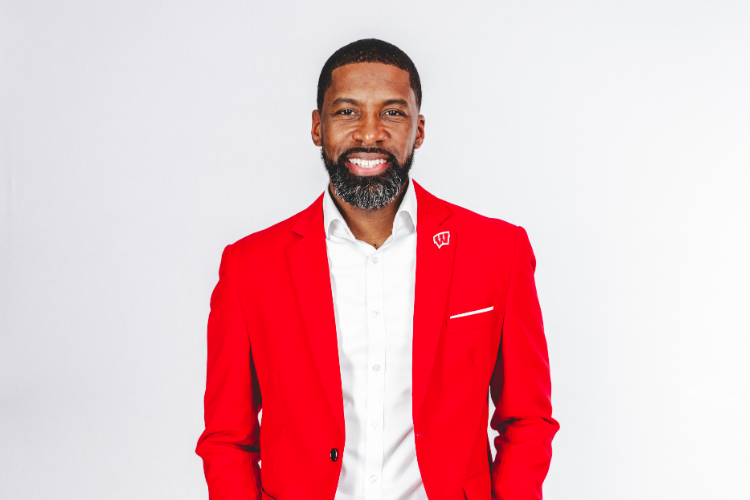
Wisconsin GM Marcus Sedberry helped compile the program’s transfer portal strategy and negotiate contracts with agents. (Photo courtesy of Wisconsin Athletics)
Wisconsin was diligent in its advance scouting of potential transfer portal entrants, according to Sedberry. He noted former director of player personnel Ethan Russo, who accepted a position at Oklahoma State last month, helped set up Wisconsin for success in that area. Sedberry said the personnel staff met weekly to identify players, discuss their measurables and on-field production and figure out who could be on the radar.
Sedberry said that, by the time the season ended, coaches had the tools they needed with spreadsheets and evaluation grades to determine positional big boards. But coaches also were responsible for doing significant legwork. Fickell provided an example of Wisconsin needing two or three interior defensive linemen but having conversations with 15 of them to keep the Badgers in a good position.
“For three or four weeks, with our interior guys or an edge, like, they may have watched 300 guys,” Fickell said. “And how do you know who to watch? Maybe it’s word of mouth, maybe it’s an agent, maybe it’s a high school coach. Just somebody that says, ‘Hey, check this guy out at Arkansas State, or, ‘Check this guy out.’
“So you do the evaluation on those guys. You don’t have a big enough recruiting department to do that. So for our guys, D-tackles, to evaluate 250 of them and try to rank them and put them in categories, that’s what they’ve been doing.”
Sedberry noted that Wisconsin also demonstrated flexibility in quickly seizing opportunities with unexpected portal entrants. Despite all the planning, there were instances in which Wisconsin had to blow up its board because a quality player the Badgers didn’t anticipate entering the portal did so. He helped arrange for contracts that were a mixture of one- or multi-year deals, depending on what was important to the player.
Fickell said Wisconsin didn’t have a specific target number of portal additions because of the potential for current players on the roster to leave (the portal window runs from January 2-16). The staff also left sliding spots open at different positions. For example, if Wisconsin was able to secure four defensive linemen, that would impact whether the Badgers took an additional outside linebacker. At times, Fickell said the final spots came down to taking the best player available.
*********
Wisconsin added a dozen transfer portal players by the end of the first weekend, which included projected starting quarterback Colton Joseph from Old Dominion to help kickstart the offense. Fickell said there hasn’t been a typical day since the transfer portal opened. He made time on Saturday morning to attend a wrestling tournament for his youngest twin boys but was back on campus for meetings by noon that went until 4:30 and then picked up his wife, Amy, to attend a recruiting dinner at 5:30.
In order to be in position for such a massive influx of players, Wisconsin’s program also required necessary financial resources. Wisconsin athletic director Chris McIntosh referenced on multiple occasions last season an increased investment in the program for retaining and pursuing new players ahead of the 2026 season — a plan Fickell and Sedberry said the staff was able to execute.
Sedberry said he still believed that the Wisconsin football brand and the culture of the program when players visited made a difference. But he also acknowledged an infusion of money that allowed Wisconsin to spend above its revenue-sharing allotment was critical. Wisconsin beat out multiple Power 4 programs for nearly all of its portal additions.
“I think that the financial investment and commitment that the chancellor and Mac have and others have given for us to be able to do what we’re trying to do definitely makes a difference,” Sedberry said. “I’m hopeful that, more than anything, we’re able to see the difference on Saturdays in the fall.”
Wisconsin has added two transfer portal quarterbacks, three running backs, two wide receivers, two tight ends, four offensive linemen, three defensive linemen, one inside linebacker, one outside linebacker, four cornerbacks and two safeties in the past week. Fickell said he was pleased about the volume of talent Wisconsin is bringing in at cornerback and running back, among other positions.
Wisconsin took three running backs, in part, because the staff is preparing in case tailback Gideon Ituka won’t be available this season because of a serious injury he sustained against Indiana. Fickell also said quarterback Danny O’Neil, who suffered an Achilles injury against Washington, likely wouldn’t be cleared until, at best, the beginning of preseason practices.
Fickell said he believed Wisconsin was in a better spot to have more depth at multiple positions. He cited how the Badgers transformed the defensive line last offseason with more impactful performers through the portal, with the hopes of recreating that success “on a bigger scale” across more rooms.
Fickell acknowledged that Wisconsin — which is 17-21 overall and 10-17 in the Big Ten under him — is nowhere near where it needs to be in the league. That’s why he said he also wanted players who were willing to be, as he put, “climbers,” or individuals willing to come in and work to create change.
The past several weeks have been a whirlwind inside the football offices. Fickell said he has walked the halls because there hasn’t been time for full staff meetings. He reminded his coaches that someday soon they will get back to the business of coaching football with a lot to prove.
“We’re going to find out if we’re good football coaches because where we might have some new pieces and things like that, you’re going to have to coach,” Fickell said. “You take some of these offensive line guys, and they have some experience. Maybe they aren’t bona fide starters. But they’re older.
“There’s some talent there that it’s not like a freshman kid coming in. And now we’re going to have to coach the hell out of them.”
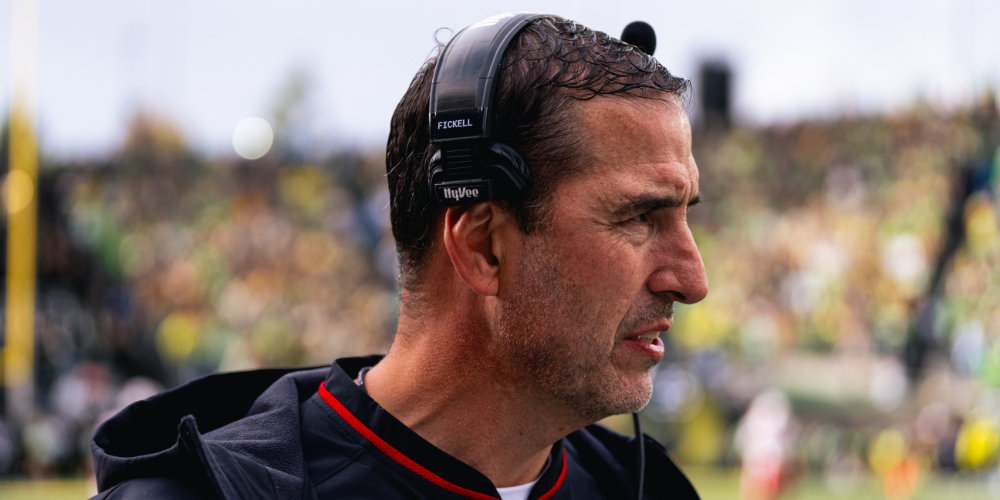
(Top photo of Luke Fickell courtesy of Wisconsin Athletics)